
Ask someone planning their first South African holiday where they’re going and there’s a good chance you’ll hear two names:
Cape Town and Kruger.
And we understand why.
Cape Town is one of the world’s great cities. Kruger offers some of the finest wildlife experiences anywhere in Africa.
But here’s the problem.
If that’s all you see, you’ve barely scratched the surface.
South Africa has nine provinces, thousands of kilometres of coastline, enormous mountain ranges, deserts, forests, tiny towns, subtropical beaches and wildlife reserves that many international visitors have never heard of.
And heading into Tourism Month this September, South Africa is making a concerted effort to encourage travellers to discover more of it.
The Department of Tourism’s message this year is essentially simple:
Get off the familiar route.
The government has called for provinces and cities to develop and promote experiences beyond South Africa’s traditional tourism corridors, while Limpopo has been selected as the focus province for Tourism Month 2026. (Government of South Africa)
We think they’re onto something.
So, if you’re willing to venture beyond the usual South African itinerary, here’s what you could discover.


First: Don’t Skip Cape Town and Kruger!
Let’s get one thing straight.
We’re absolutely not telling first-time visitors to avoid the classics.
If you’ve travelled halfway around the world to South Africa, you should see Table Mountain.
Drive Chapman’s Peak.
Visit the Winelands.
And if seeing a lion, elephant or leopard in the wild has been on your bucket list for years, go on that safari.
The point is that these places can be the beginning of your South African adventure rather than the entirety of it.


1. Limpopo: South Africa’s Wild North
Let’s start with the province South Africa is putting firmly in the spotlight for Tourism Month 2026.
Limpopo.
For many international travellers, Limpopo is somewhere they pass through on the way to a safari.
That is a mistake.
This is one of South Africa’s most fascinating provinces.
Up here, the landscape feels different.
There are enormous baobab trees, mountains, wildlife reserves, archaeological sites and wide-open spaces stretching towards Botswana, Zimbabwe and Mozambique.
And then there’s Mapungubwe National Park.
This UNESCO World Heritage landscape contains the remains of the Kingdom of Mapungubwe, which flourished between roughly AD 900 and 1300 and developed into an important trading state in southern Africa.
It is also where South Africa’s official World Tourism Day celebration will take place in September 2026. (South African Tourism)
This isn’t simply somewhere to photograph wildlife.
It’s somewhere to understand just how deep South Africa’s history runs.


2. The Cederberg: Wild Country Just Beyond Cape Town
Drive north from Cape Town and eventually something strange happens.
The vineyards and towns begin disappearing.
The mountains become more dramatic.
The landscape turns increasingly wild.
Welcome to the Cederberg.
For travellers who enjoy hiking, photography, camping and genuinely getting away from everything, this is one of the Western Cape’s great escapes.
Massive sandstone formations rise from the landscape in extraordinary shapes.
At night, the lack of city lights reveals spectacular skies.
And hidden amongst the rocks are ancient San rock-art sites connecting today’s visitors with people who lived in these landscapes thousands of years ago.
It feels incredibly remote.
Yet you’re still within reach of Cape Town.

Why Add the Cederberg to Your Holiday?
Because it offers something completely different.
Cape Town gives you cosmopolitan South Africa.
The Winelands give you the country’s food and wine culture.
The Cederberg gives you space.
Pack walking shoes.
Bring a camera.
And look up after dark.
3. The Eastern Cape: Safari Without Flying to Kruger
This is one we particularly love for first-time visitors.
Imagine you’ve spent several days in Cape Town.
You pick up a hire car.
Drive through the Winelands and along the Garden Route.
Explore Wilderness, Knysna, Plettenberg Bay and Tsitsikamma.
And instead of flying across the country to Kruger…
You keep driving.
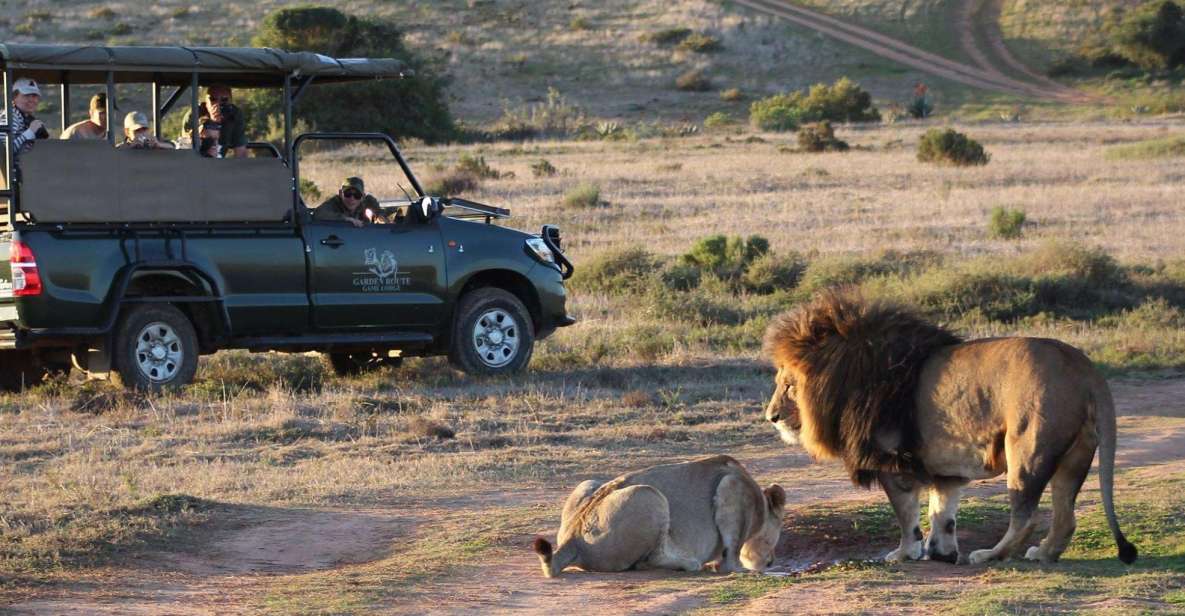
Eventually you reach the private game reserves of the Eastern Cape.
Suddenly you’re on safari.
Lion.
Elephant.
Rhino.
Buffalo.
And, if you’re lucky, leopard.
That means you can combine Cape Town → Winelands → Garden Route → Big Five Safari into one beautifully flowing itinerary.
No backtracking across the country required.

And There’s More to the Eastern Cape Than Safari
The province has an extraordinary coastline, small towns, mountain landscapes and deep cultural significance.
It was also the birthplace of some of South Africa’s most important historical figures, including Nelson Mandela and Steve Biko.
This is where simply “seeing South Africa” starts becoming understanding South Africa.
4. The Drakensberg: Mountains on an African Scale
South Africa’s beaches and wildlife receive enormous international attention.
Its mountains deserve more.
The Drakensberg rises dramatically across KwaZulu-Natal, creating some of the country’s most spectacular scenery.
This isn’t a little afternoon walk above Cape Town.
The landscape is enormous.
Cliffs.
Valleys.
Waterfalls.
Mountain streams.
Hiking trails disappearing towards peaks in the distance.
And amongst this landscape are thousands of examples of San rock art.
Spend a few nights here and South Africa suddenly feels like a completely different country again.
That’s becoming a recurring theme, isn’t it?
5. KwaZulu-Natal: Where Safari Meets the Indian Ocean
Now imagine this itinerary.
Morning:
Searching for rhinos on safari.
A few days later:
Swimming in the warm Indian Ocean.
That’s KwaZulu-Natal.
The province allows travellers to combine wildlife, mountains, beaches, Zulu culture and the energy of Durban in one journey.
And unlike Cape Town’s famously refreshing Atlantic Ocean, the Indian Ocean coastline offers much warmer water.
For travellers wanting a South African holiday combining safari and a proper subtropical beach escape, KZN deserves serious consideration.


6. The Karoo: Sometimes the Attraction Is Nothing
Nothing.
For kilometres.
And kilometres.
And kilometres.
That might not sound like much of a tourism pitch.
Until you experience the Karoo.
South Africa’s vast semi-desert interior has a way of making you slow down.
Tiny towns appear beside long empty roads.
Mountains shimmer on the horizon.
Old wind pumps turn slowly beside farmhouses.
And after sunset?
The sky takes over.
With very little light pollution across large parts of the region, the Karoo can offer magnificent stargazing.


It’s not somewhere you visit because there’s a list of 25 attractions to tick off.
You go because of how the place feels.
And sometimes that’s exactly what travelling should be about.
7. The Wild Coast Really Is Wild
The name isn’t marketing.
South Africa’s Wild Coast stretches along the Eastern Cape, offering dramatic cliffs, rolling green hills, river mouths and beaches that can feel almost impossibly empty.
Development is limited compared with many famous coastal destinations.
That’s exactly the appeal.
This is somewhere for travellers willing to slow down.
Walk.
Explore.
Talk to people.
Watch the ocean.
And resist the temptation to turn every day into a checklist.

Why South Africa Wants Travellers to Explore Further
There’s a bigger story behind all of this.
Just days ago, tourism was formally included among the priority sectors in Phase Three of South Africa’s Government-Business Partnership, alongside agriculture, agro-processing and mining.
The objective is to push economic growth above 3%, with tourism identified for its ability to attract investment, bring foreign currency into the country and create jobs at scale. (South African Tourism)
The priorities include improving air access, modernising visa processing, improving tourist safety, strengthening destination marketing and investing in tourism infrastructure. (South African Tourism)
And that matters because tourism doesn’t only support hotels.
Think about what happens when you spend a night in a small South African town.
You might pay a guesthouse.
Eat at a local restaurant.
Buy petrol.
Hire a guide.
Visit an attraction.
Buy something from a local shop.
Drink locally produced wine or beer.
Employ a driver.
Suddenly one traveller is supporting a surprisingly large chain of businesses.
That’s why getting visitors beyond a handful of famous destinations matters.


South Africa’s Tourism Boom Isn’t Slowing Down
The timing couldn’t be better.
Between January and June 2026, South Africa welcomed close to 5.6 million international tourists — roughly 12% more than during the same period last year. (Government of South Africa)
The government’s ambition now is not simply to bring more people into South Africa.
It’s to give them more reasons to travel through South Africa.
We agree.
Because Cape Town is incredible.
Kruger is incredible.
The Garden Route is incredible.
But South Africa is much, much bigger than its greatest hits.
What Should a First-Time Visitor Do?
If it’s your first South African holiday, don’t feel that you need to disappear into the wilderness for three weeks.
Start with the classics.
A brilliant first journey could still look like:
Cape Town → Cape Winelands → Garden Route → Eastern Cape Safari
But if you have more time — or you’re coming back for your second visit — start looking further.
For mountains: Drakensberg.
For wilderness near Cape Town: Cederberg.
For history and safari: Limpopo.
For warm beaches + wildlife: KwaZulu-Natal.
For road trips and stargazing: Karoo.
For untouched coastline: Wild Coast.


Don’t Just Visit South Africa. Explore It.
There’s something we particularly like about the message behind Tourism Month this year.
South Africa’s Tourism Minister put it rather neatly: sometimes discovering somewhere extraordinary doesn’t require crossing an ocean — it might simply mean crossing a provincial border or turning off the highway into a town you’d normally drive past. (Government of South Africa)
For international visitors, we’d take that idea one step further.
Come to Cape Town.
Stand on top of Table Mountain.
Go on safari.
See your first elephant in the wild.
But then…
Take the road you weren’t originally planning to take.
Stay another night.
Visit the small town.
Explore another province.
Because some of the best South African travel experiences begin after you’ve finished ticking off the places you already knew about.
At African Travel Desk, we build tailor-made South African journeys around how you actually want to travel — whether that’s the classic Cape Town and safari experience or a longer adventure into parts of the country you’ve never considered before.
You’ve heard about South Africa.
Now come and discover it.


Frequently Asked Questions
Where should I visit in South Africa besides Cape Town and Kruger?
The Garden Route, Eastern Cape, KwaZulu-Natal, Drakensberg, Cederberg, Limpopo, Karoo and Wild Coast are all worth considering. The best choices depend on whether you’re most interested in wildlife, beaches, hiking, culture or road trips.
Which South African province is the focus of Tourism Month 2026?
Limpopo is the focus province for Tourism Month 2026, with South Africa’s World Tourism Day celebrations planned for Mapungubwe National Park. (South African Tourism)
Can I combine the Garden Route with a safari?
Absolutely. One of the easiest options is continuing east along the Garden Route into the Eastern Cape, where several private game reserves offer safari experiences.
How long do I need to explore South Africa properly?
For a first visit, 10–14 days gives you a good introduction. If you’d like to include less-visited regions alongside Cape Town and safari, two to three weeks gives you considerably more freedom.
Is South Africa good for road trips?
Very. Routes through the Western and Eastern Cape in particular combine good tourism infrastructure with spectacular scenery and a huge variety of places to stop.
I